Clinic operations
Build a laser hair removal care protocol that keeps patients finishing their course
A strong protocol screens skin type, tan, photosensitising medications and hair colour, has patients shave rather than wax and avoid sun before sessions, and sets clear aftercare. It names normal redness and swelling, and the signs that need a call.
Laser hair removal is the most repeatable service on an aesthetic menu, and that is exactly why the care around it matters. A patient who shows up tanned, waxed or on a new medication costs you a session. A patient who mistakes shedding for failure, or redness for a burn, costs you the rest of the course. The protocol around the laser decides how many of your patients finish.
What should a laser hair removal pre-care and aftercare protocol include?
Screening for skin type, recent tan, photosensitising medications and hair colour; pre-care that has patients shave rather than wax, avoid sun and self-tanner, and arrive with clean skin; aftercare that names normal redness and swelling, calls for sun protection and explains shedding; and clear escalation signs with a named contact. Write it once and use it every time.
Why a written protocol pays for itself
Hair removal is sold as a course, not a visit, and patients need multiple treatments to reach a satisfying result (Liew, American Journal of Clinical Dermatology, 2002). Every session they skip is revenue the package already priced in, and every unprepared patient who arrives tanned or freshly waxed is a slot you cannot treat.
A consistent protocol earns its keep in three places:
- Package completion. Patients who understand shedding and session spacing stay on schedule instead of deciding at session two that “it isn’t working”.
- Rebooking. Pre-care instructions sent with each booking confirmation mean fewer reschedules at the door.
- Fewer avoidable calls. Telling patients in advance that redness and bumps are expected answers the question before they need to phone, which frees your front desk and your provider.
Consultation and screening
Screening is where a care protocol starts. Capture the same information for every new patient and re-check it before each session.
Skin type and recent sun. Record the Fitzpatrick type and ask directly about recent sun, tanning beds and self-tanner. Adverse effects after laser hair removal are more common in darker skin, and longer-wavelength devices reduce that risk (Lim and Lanigan, Lasers in Medical Science, 2006). A fresh tan behaves like darker skin, so a patient’s history matters as much as their baseline type. Our guide to laser hair removal across skin types I–VI covers why wavelength and cooling shape that planning.
Medications and topicals. Ask about prescription and over-the-counter medications, supplements and skincare, and flag anything known to increase light sensitivity for the provider to review. Keep the intake question open-ended and current: “Has anything changed since your last visit?” catches new prescriptions.
Hair colour. The laser targets melanin in the hair follicle, so hair with little pigment, such as white, grey and many light blonde or red hairs, gives it little to work with. Set that expectation at consultation, before the patient buys a package.
History. Note previous laser or light treatments, cold-sore history for facial areas, active skin conditions, tattoos in the treatment area, and any history of abnormal scarring or pigment change. These go to the provider, who decides suitability and plan.
Pre-care instructions
Send these with every booking confirmation, not just the first.
- Shave, don’t wax, pluck or epilate. The laser needs pigmented hair in the follicle to target. Waxing, plucking, threading and epilating remove it; shaving leaves it in place while clearing surface hair that would absorb energy on the skin.
- Avoid sun and self-tanner. Sun avoidance before treatment is one of the established ways to reduce adverse effects (Liew, 2002). Ask patients to protect the area and to tell you honestly if they have tanned.
- Arrive with clean skin. No lotion, oil, deodorant, makeup or numbing products on the area unless the provider has approved them.
- Report changes. New medications, a recent illness, or a new skincare product on the treatment area should be raised before the session, not after.
During the session: where cooling fits the protocol
Cooling is not only a comfort feature; it is part of the care protocol. Contact cooling protects the epidermis while energy passes through it to reach the follicle, and cooling the skin during treatment is listed among the methods that reduce adverse effects (Liew, 2002). For a deeper explanation, see why cooling matters in laser hair removal, and for the running cost of different methods, how laser cooling shows up in cost per treatment.
The same logic applies to wavelength. A platform that offers 1064 nm alongside 808 nm gives a trained provider more room to plan for darker skin types; 755, 808 or 1064 nm: what the wavelength changes explains the trade-off. Settings remain the provider’s decision for each patient and area.
Post-care instructions
Give patients a short, printed sheet before they leave, written for the evening after treatment.
- What is normal. Redness and small bumps around the follicles, called perifollicular swelling, are common after laser hair removal (Liew, 2002). They are usually transient (Lim and Lanigan, 2006).
- Cooling at home. A clean, cool compress can ease warmth and redness.
- Sun protection. Sun avoidance and protection after treatment are part of reducing adverse effects. Ask patients to cover and protect the area through the course.
- Avoid heat and friction briefly. Hot baths, saunas, intense exercise, tight clothing and scrubs can aggravate freshly treated skin. Ask patients to keep things gentle until redness has settled.
- Shedding is expected. Over the following weeks, treated hairs push out and fall away, which can look like regrowth. Tell patients in advance, or they will call it failure.
Why sessions are spaced
Hair grows in cycles, and only part of the hair in any area is actively growing at one time. It is generally believed that follicles respond best in the growing (anagen) phase, though results have been mixed (Liew, 2002). Spacing sessions across a course lets the provider reach follicles as they cycle into growth. Explain the concept, then let the provider set the interval for each area.
When to escalate
Most adverse effects after laser hair removal are transient and minor, and lasting complications are very uncommon (Lim and Lanigan, 2006). Crusting, blistering and pigment change, both darkening and lightening, are recognised reactions (Liew, 2002), and patients need to know they are not something to wait out.
Ask patients to call the clinic promptly if they notice:
- Blisters or crusting in the treated area
- Skin that stays raw, weeping or increasingly painful instead of settling
- Redness or swelling that worsens after the first day or two
- New darkening or lightening of the skin as the area heals
Give them a named contact and a number answered outside clinic hours, and document every call in the patient record.
A protocol checklist your clinic can adapt
| Stage | What to cover | Who owns it |
|---|---|---|
| Consultation | Fitzpatrick type, recent sun or tanning, medications and topicals, hair colour, prior treatments, relevant history | Provider |
| Expectation setting | Multi-session course, shedding, hair colour limits, results vary | Provider or coordinator |
| Booking confirmation | Shave not wax, no sun or self-tanner, clean skin, report changes | Front desk |
| Day of treatment | Re-check sun, medications and skin; photograph baseline; confirm consent | Provider |
| During treatment | Wavelength and cooling planned for skin type; settings per provider | Provider |
| Discharge | Printed aftercare: normal reactions, cooling, sun protection, heat and friction, shedding | Provider |
| Follow-up | Next session booked before leaving; escalation contact given | Front desk |
| Every visit | Ask “anything changed since last time?” and update the record | Provider |
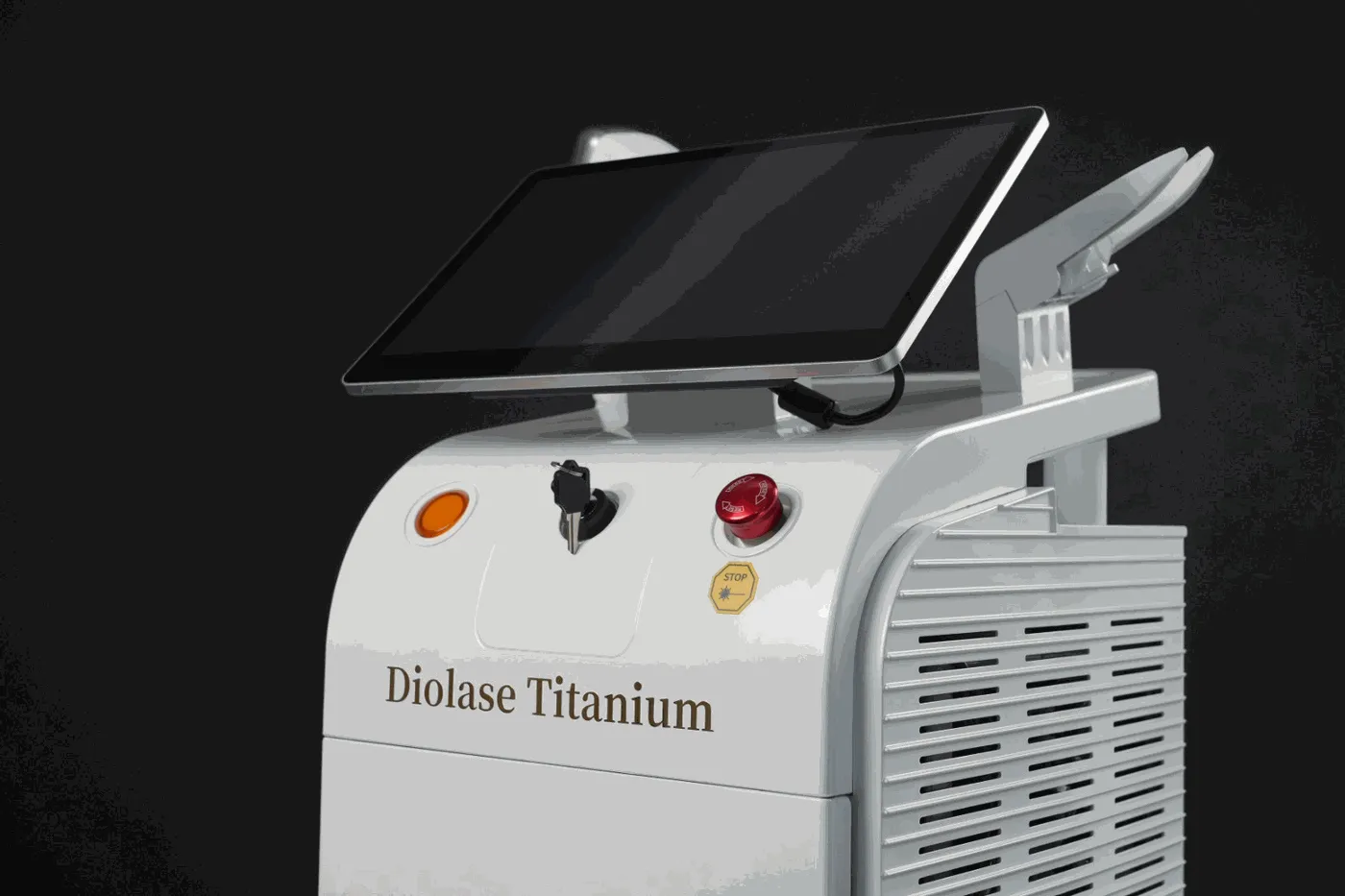
Adapt the wording to your clinic, but keep the structure. Your team should know exactly who says what, and when. The DioLase Titanium new-owner operating guide shows how a session workflow, including post-treatment documentation, fits around the platform.
DioLase Titanium for a hair removal service your patients complete
DioLase Titanium is built to make laser hair removal one of the hardest-working services in your clinic, with the speed and range a well-run protocol needs.
- 1,800 W diode platform with TruePulse™ collimated beam delivery
- Quattro 4D™ 755 / 808 / 1064 nm, with 808 nm at the core and 1064 nm for darker skin types, supporting planning across skin types I–VI
- -35°C ICE sapphire contact cooling for virtually painless sessions
- 12 × 36 mm handpiece with a detachable precision tip for small areas such as the nose and ears
- Full-body treatments in approximately 25–30 minutes, with a typical course of approximately 4–5 sessions depending on patient factors
- DioLase V-Line Lifting™ as an additional service line
- Clinical training and onboarding included, plus an 18-month warranty
- Health Canada licensed (MDL 111503)
- Lease-to-own from $599/month OAC
Build a hair removal service your patients finish. Book a demo, request pricing or run the ROI calculator. For common patient questions, see the diode hair removal FAQs.
This article is general education for clinics and prospective buyers, not medical advice. Suitability, settings, session spacing and results vary with the individual, their skin and hair type, the treatment plan and a trained provider’s assessment. Indications and regulatory availability may vary by jurisdiction. Financing is on approved credit.
FAQs
What should patients do before diode laser hair removal?
Shave the area rather than waxing, plucking or epilating, avoid sun exposure and self-tanner, arrive with clean skin free of lotion, deodorant or makeup on the area, and tell the clinic about any new medications or topical products, since some increase light sensitivity.
What is normal after a laser hair removal session?
Redness and small raised bumps around the follicles (perifollicular swelling) are common and usually transient. Over the following weeks, treated hairs shed and can look like regrowth. Both are expected, and patients should hear this before they leave.
When should a patient call the clinic after laser hair removal?
Blistering, crusting, skin that stays raw or weeping, pain or redness that worsens instead of settling, or any new darkening or lightening of the skin. These are uncommon but should be reviewed by the treating provider promptly rather than at the next session.
Why are laser hair removal sessions spaced weeks apart?
Hair grows in cycles, and not every follicle is in its growing phase at the same time. Spacing sessions across a course lets the provider treat follicles as they cycle into growth. The interval is set by the provider for the body area and the patient, not by a fixed rule.
Does cooling matter for aftercare?
Yes. Contact cooling protects the skin surface while energy reaches the follicle, and cooling of the skin during treatment is one of the established ways to reduce adverse effects. Good in-treatment cooling is part of what makes aftercare simple.
Keep reading
Considering a platform for your clinic? Request pricing or book a demo.